Ask what was actually measured
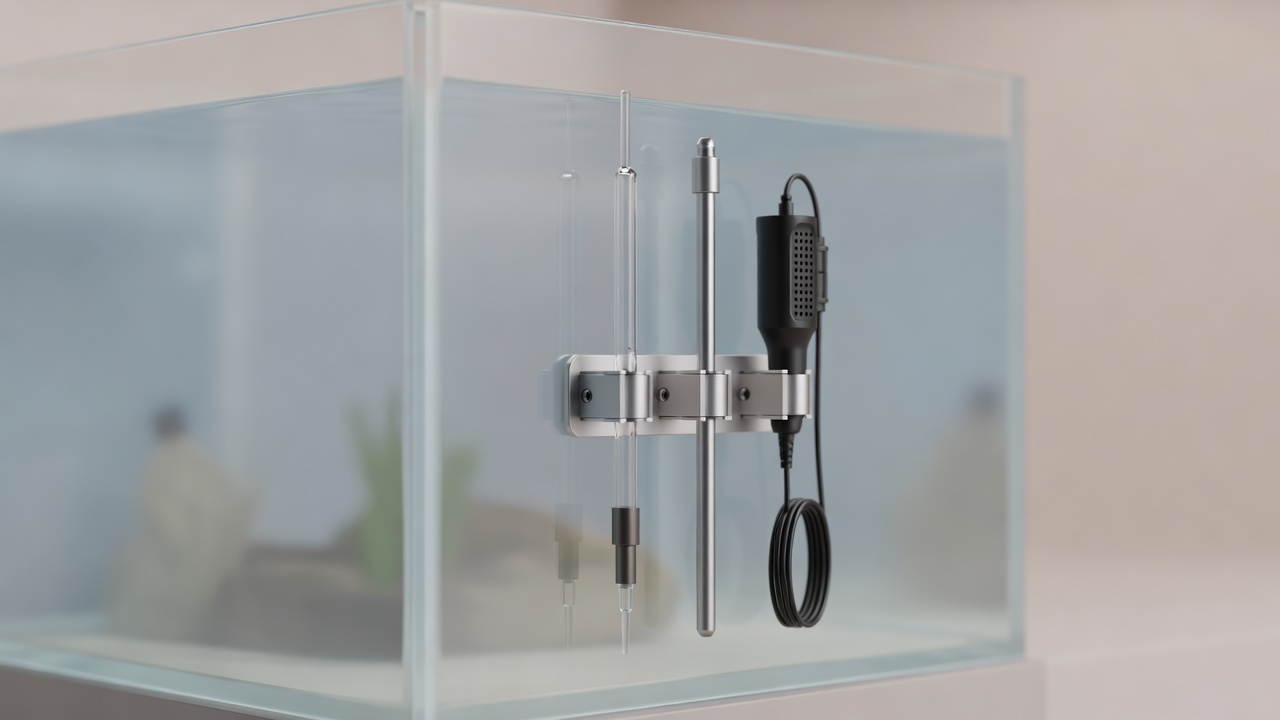
A temperature probe senses conditions near its sensing element. A pH electrode responds to an electrochemical potential that is interpreted as pH. A conductivity sensor measures how readily the water carries electrical current. These are different physical observations, even when a dashboard places them on identical-looking tiles.
Some displayed quantities are calculated rather than directly sensed. A total dissolved solids estimate may be derived from conductivity using a conversion factor. Salinity may be inferred using a specified relationship and temperature compensation. Before comparing devices, check the units, method and assumptions. Two plausible numbers can disagree because they represent different quantities.
Resolution also differs from accuracy. A display with several decimal places does not demonstrate that the underlying measurement is correct to those places. The useful question is whether the instrument can distinguish a meaningful change under the conditions in your aquarium.
Make placement part of the record
Position a probe where it samples representative, circulating water, following the manufacturer's immersion and flow requirements. A quiet corner, a heater outlet or a recently dosed area can produce a local result that does not describe the whole tank. Bubbles against a sensing surface may interfere with some instruments.
Document the location rather than treating placement as an invisible installation detail. If the sensor moves during cleaning, record that event. A sudden step in the trace may mark the move, not a sudden change in the habitat. Comparing a nearby independent measurement helps separate those possibilities.
Keep cables secured without stressing connectors, and follow electrical safety instructions for aquarium equipment. Maintenance should never require unsafe contact with powered equipment or damaged wiring. The monitoring system is another piece of equipment to inspect, not an exception to routine safety.
Calibrate, then check independently
Calibration relates an instrument's response to reference materials or defined conditions. Use the appropriate standards, observe expiry and storage instructions, and avoid contaminating calibration solutions. Follow the device procedure for temperature equilibration, rinsing and stabilisation; a rushed calibration can create a convincing but misleading trace.
Verification asks a separate question: does the result remain credible after calibration? Compare against a suitable independent method or check standard. A repeated result from the same drifting probe is not an independent confirmation. Keep a maintenance log with the date, reference solution, observed result and any corrective work.
Do not impose one calibration interval on every aquarium. Biofouling, water composition, instrument design and the consequences of a missed change all matter. Follow the manufacturer first, then use recorded verification results to judge whether your checking schedule is adequate.
| Measurement | Useful information | Important limit |
|---|---|---|
| Temperature | Thermal conditions and changes | Local gradients and response lag |
| pH | Acid–base condition | Electrode drift, fouling and calibration quality |
| Conductivity | Changes in ionic content | Does not identify individual substances |
| Dissolved oxygen | Oxygen conditions at the sensor | Method, flow, compensation and maintenance |
| Turbidity | Light scattering by suspended material | Not a direct measure of pathogens or toxicity |
Give the model honest inputs
A useful data record includes a timestamp, unit, sensor identity and quality flag. A stale reading should not look identical to a fresh one. Missing observations, cleaning periods and failed checks should remain visible rather than being silently converted into reassuring smooth lines.
AI models can amplify a measurement problem by learning it as normal behaviour. A slowly fouling probe may teach a baseline that drifts away from the actual water. Review model outputs alongside calibration records, and keep raw measurements when possible so that a transformed chart can be checked later.
Measurement standards provide vocabulary and method context, not automatic certification of a consumer device. ISO 10523 concerns pH measurement; ISO 7888 addresses electrical conductivity; ISO 5814 covers an electrochemical method for dissolved oxygen; and ISO 7027-1 addresses quantitative turbidity methods. Check the current edition and applicability before using any standard in formal work.
The practical endpoint is modest: know what a reading represents, understand its likely uncertainty and decide whether it is good enough for the question you are asking. Only then does an automated trend become useful evidence.
Sources and method references
- International Organization for Standardization — search the named water-quality methods and confirm their scope.
- National Institute of Standards and Technology — measurement science and traceability concepts.
- Bureau International des Poids et Mesures guides — measurement terminology and uncertainty.
- USGS Water Science School — water-property explanations.